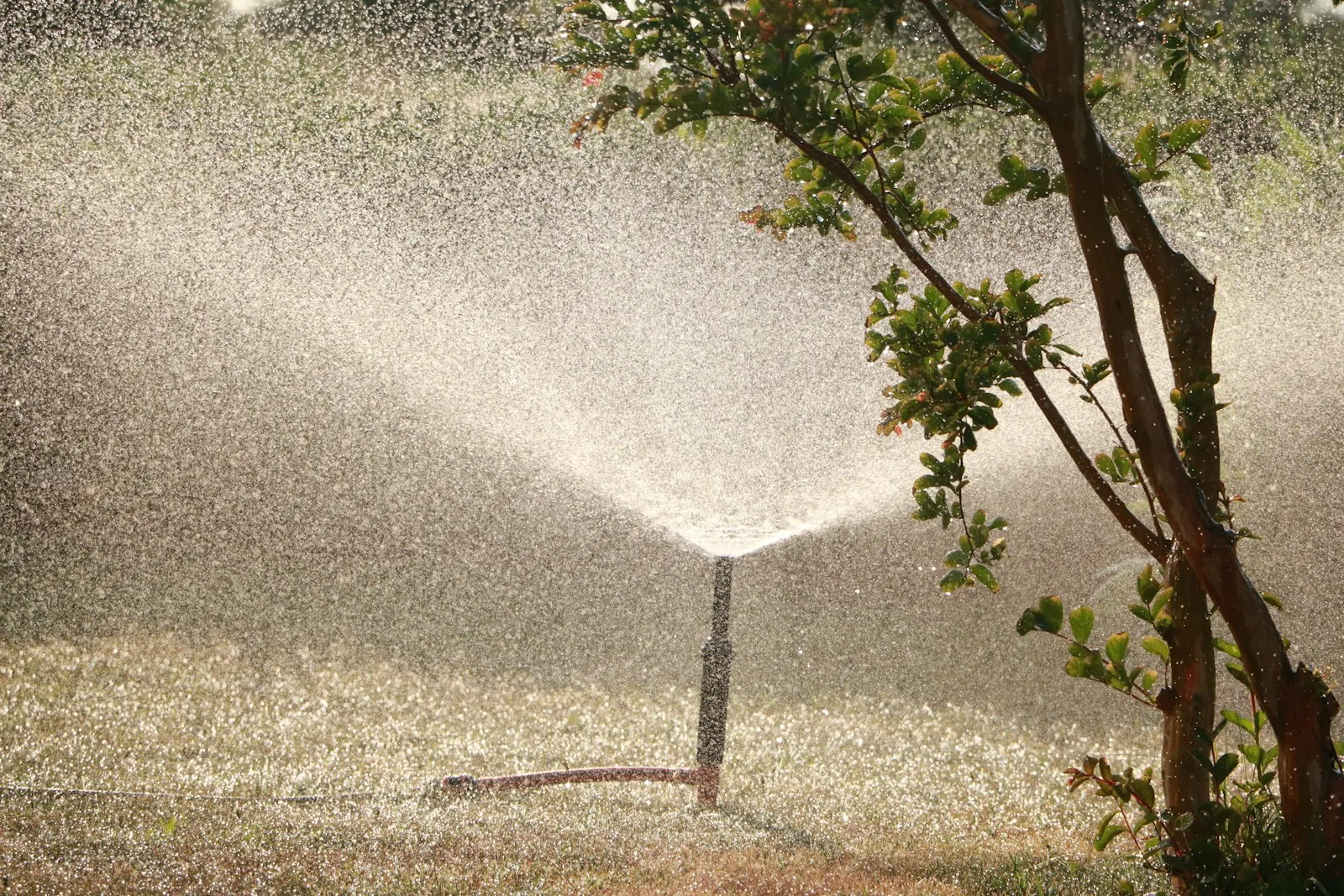
Irrigation is the number-one reason a homeowner gets a backflow test notice. A sprinkler system connects your drinking water to buried pipes, lawn heads sitting in puddles, fertilizer, pesticides and pet waste. If pressure in the main drops — a water-main break, a fire crew opening a hydrant — that water can be siphoned back toward the public supply. The backflow assembly on your irrigation line is what stops it.
Which assembly do you have?
| Type | Where you’ll find it | What to know |
|---|---|---|
| PVBA (pressure vacuum breaker) | Above ground, usually a brass assembly on copper risers near the house | Must sit at least 12" above the highest sprinkler head. Freezes easily. |
| SVBA (spill-resistant vacuum breaker) | Above ground, similar look | Designed not to spit water during pressurization. |
| DCVA (double check) | Often in a green valve box below grade | Low-hazard backpressure and back-siphonage protection. |
| RPBA (reduced pressure) | Above ground, larger, with a relief port at the bottom | Required when fertilizer or chemicals are injected into irrigation. |
| AVB (atmospheric vacuum breaker) | On older systems, after each zone valve | Not field-testable; inspected instead. Can’t have a valve downstream. |
Puget Sound winters vs. your PVB
We don’t get many hard freezes — which is exactly why people forget to drain the backflow. A cracked PVB bonnet or body after a February cold snap is one of the most common failures we see. When you winterize, the assembly should be drained and its test cocks opened; when you start back up in spring, it should be closed and tested.
Due date in the off-season? An assembly has to be pressurized to test. If your utility’s due date falls while your system is winterized, we’ll schedule the test at spring start-up and help you coordinate timing with your utility.
Do I need to be home?
No. If the assembly is outside and the irrigation supply is on, we can test without you. We text when we arrive and when we’re done, and email the report and photos.